Simulation

Marketing
Test pricing, promotion, and channel trade-offs against live performance before budget is committed.
Workflow 1 — Marginal ROI Curve by Channel
Marginal ROI by spend increment · Steeper decline = diminishing returns
£142
4.3x
4.2 mo
Partnerships 3.2x
Channel optimisation actions
Causal timeline
Marginal ROI Curve by Channel
Channel ROI model feeds budget reallocation.
ROI → Actions
ROI curve feeds channel optimisation actions and diminishing-return caps.
Budget Reallocation Impact Shift
Optimised budget feeds growth mix.
Budget → Frontier
Budget shift feeds growth-mix frontier and margin constraints.
Growth Mix Frontier
Growth strategy committed to CRM / Planning system.








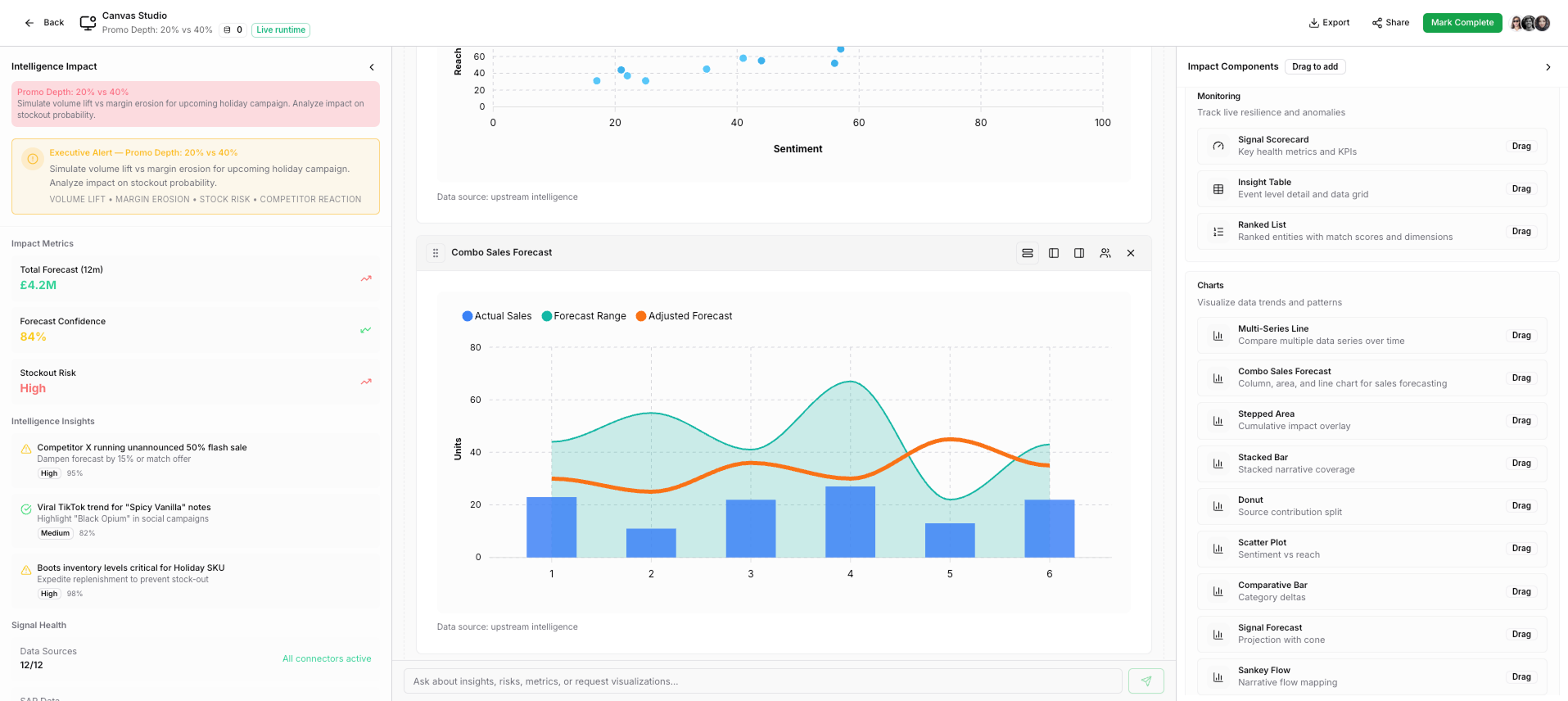
Connect Campaign Activity to Revenue and Stock. Unify marketing activity with sales and inventory signals so performance is measured by commercial outcome, not clicks.
Adopted by forward-thinking executive teams, Nimbus connects finance, operations and commercial data into a unified causal model — empowering leaders to simulate strategy, quantify ROI, and act with zero decision latency.
Simulation

A New Paradigm for CFOs & COOs
Intelligence Infrastructure
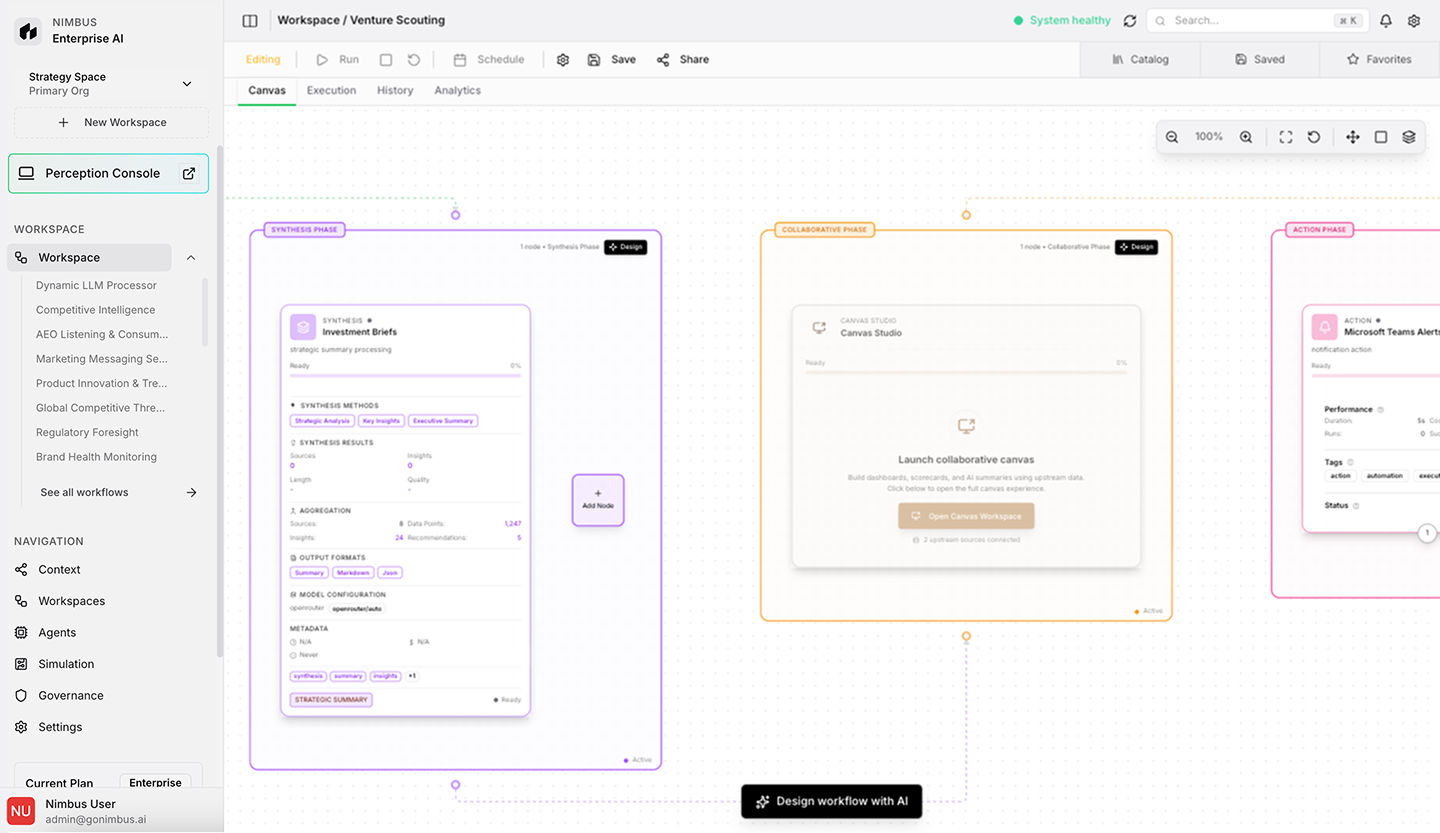
Every operation shares organizational context. Every decision is traceable. Every outcome propagates. Nimbus connects your business processes through a shared model of cause and effect.
Learn moreNimbus turns the complexity of modern organisations into a living system where agents, workflows and data continuously adapt to guide better decisions.
How simulation-driven decision-making and digital twins can help rebuild trust and resilience in global agri-food supply chains.
Senior executives at leading OEMs recognize that today's market pressures – surging EV competition, software-defined vehicles, volatile supply chains, and AI-driven planning – demand unprecedented cross-functional collaboration. Yet most product, engineering, supply-chain, sales and marketing teams remain trapped in silos, each with its own data, assumptions and priorities.
Traditional FMCG product research methods increasingly fall short in today's fast-moving markets. Companies often rely on static dashboards, quarterly reports and one-off surveys that only capture lagging indicators of consumer behavior and market conditions.